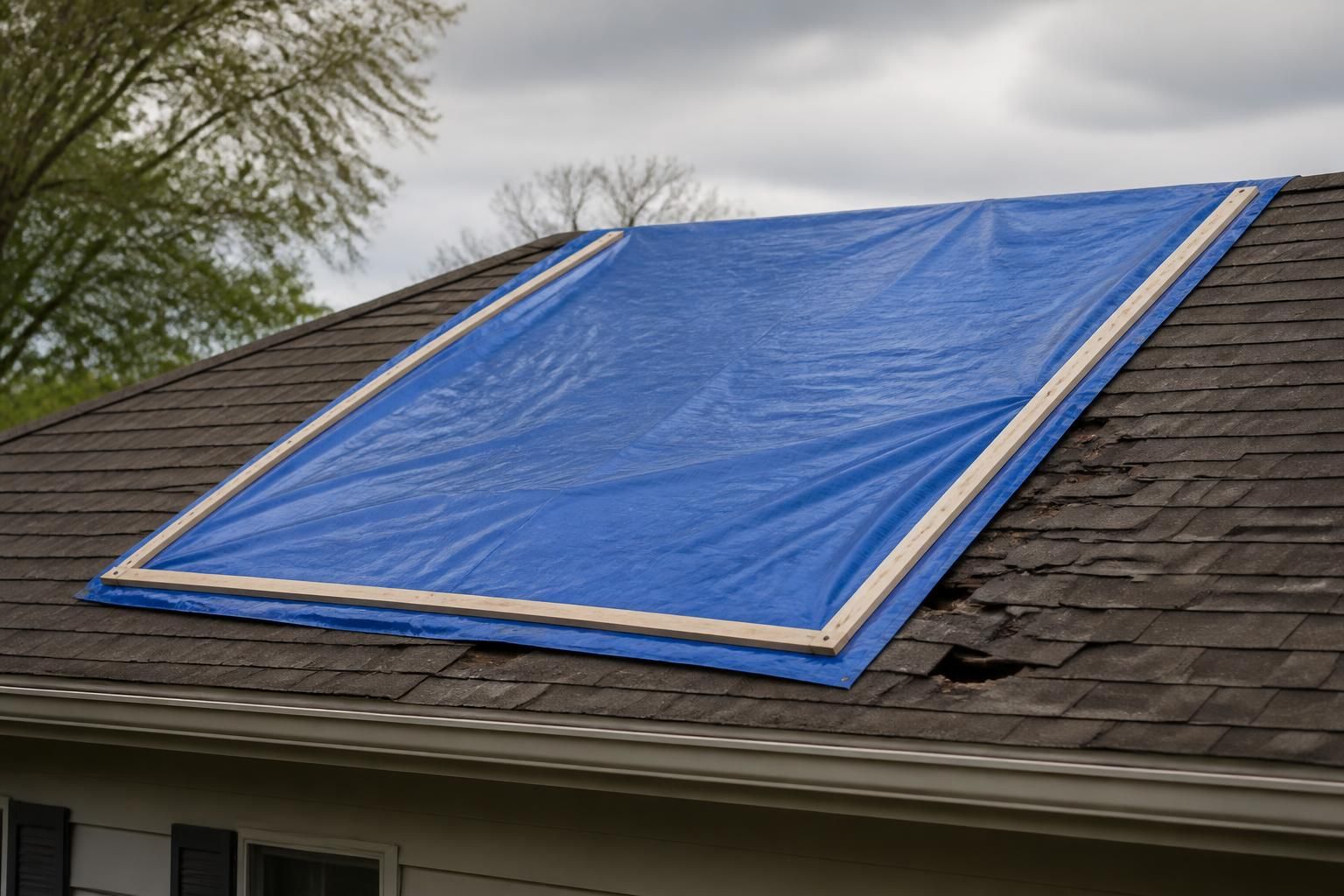
A damaged roof can turn a small problem into soaked ceilings, wet insulation, and a stressed-out evening fast. If shingles are missing, a branch has torn an opening, or water is starting to track through the attic, a roof tarp can help stop more water from getting inside while you plan the next step.
Ridgeline Roofing Co. serves Denver, CO with roof tarping that helps cover exposed sections after sudden damage. We assess the opening, secure the tarp with care, and focus on keeping more moisture out until a fuller repair can be arranged.
When a tarp helps
Roof tarping is a short-term protective measure for a roof that has been opened up by weather, falling debris, or failed materials. It is most useful when the roof deck or underlayment is exposed and you need coverage before water has time to spread farther through the home.
It can help when you notice these problems:
- Missing or torn shingles after a storm
- A visible hole or puncture on the roof surface
- Active dripping from a ceiling or attic area
- Loose materials lifted back and left exposed
- Water stains that seem to grow after rain
A tarp is not a repair on its own. It is a practical shield that buys time and reduces further damage while the roof is assessed for repair or replacement.
What we look for
Before a tarp goes up, we need to understand what has been exposed and how far the damage reaches. A good cover depends on the shape of the opening, the slope of the roof, and the condition of the surrounding materials.
Visible roof damage
We look for torn shingles, lifted edges, broken flashing, punctures, and sections where the roof covering no longer protects the deck below. If the damage extends beyond one obvious spot, the tarp may need to cover a wider section.
Water entry points
We also check where water is likely moving. Sometimes the leak shows up far from the opening. Tracking the path helps us choose a placement that blocks the source rather than only covering the symptom.
Safe access
A roof can be slick, loose, or unstable after damage. We make sure the tarp can be installed without adding avoidable stress to the structure or creating a hazard on the way up or down.
How we tarp roofs
Ridgeline Roofing Co. uses a straightforward process so the coverage is secured and the roof is ready for the next phase of work.
- Assess the opening
We inspect the damaged area, nearby shingles, and edges so the tarp can be sized and placed with purpose.
- Prepare the surface
Loose debris is cleared away when possible, and the area is readied so the tarp can lie across the damaged section without unnecessary folds.
- Position the tarp
The covering is extended past the exposed area so it can shed water away from the opening rather than stop short of it.
- Secure the edges
We fasten the tarp carefully so it stays where it should and resists lifting from wind and runoff.
- Check the coverage
After placement, we inspect the edge lines and overlap areas to confirm the exposed section is shielded as intended.
That process helps reduce the chance of water finding its way under the cover and into the areas below.
Why fast coverage matters
Once a roof opening exists, time matters. Rain does not need a large gap to create a bigger mess inside the house. Water can move into insulation, drywall, framing, and stored belongings before the damage is obvious from the ground.
A tarp can help reduce the spread of moisture, but it also does something else that matters: it gives you breathing room. Instead of rushing into a repair decision with active water getting inside, you can move forward with a clear view of the damage and the next steps.
For many Denver homeowners, that is the difference between a manageable repair and a more disruptive cleanup.
After the tarp
Once the roof is covered, the next step is a careful look at what needs to happen next. Sometimes the fix is limited to a small repair. Other times the damage points to a broader replacement or a different roofing material approach.
Ridgeline Roofing Co. handles roof repair, roof replacement, roof inspection, storm damage repair, flat-roof service, gutter work, shingle roofing, metal roofing, and commercial roofing. That means we can move from temporary protection to a more complete solution without changing direction halfway through the process.
Common follow-up needs may include:
- Replacing damaged shingles or underlayment
- Repairing flashing around vulnerable areas
- Addressing leak paths found during inspection
- Restoring sections that were loosened or torn away
- Planning replacement when repairs no longer make sense
Damage signs
Some roof problems are obvious from the outside. Others show up indoors before anyone sees the roof itself. If you notice any of the signs below, it is worth taking them seriously.
Inside the home
Look for ceiling spots, peeling paint, damp insulation, musty odors, or water collecting near walls and upper-floor fixtures. These signs often point to moisture getting past the roof surface.
Outside the home
From the ground, you may spot lifted shingles, scattered roofing material, uneven edges, or places where the roof line looks disturbed. If you can safely see missing pieces, a tarp may be the right next step.
After bad weather
If a storm has passed and the roof now looks different than before, do not wait for the next rain to test it. A quick cover can help keep a damaged section from getting worse.
What to do first
If you suspect roof damage, take a few simple steps before anyone climbs up to inspect it. These actions can reduce stress and help us work more efficiently when we arrive.
- Keep clear of the area
Stay away from rooms with dripping water, sagging drywall, or active moisture until the source is assessed.
- Document what you see
Take photos from safe spots inside and outside the home so the damage can be reviewed clearly.
- Move valuables
If water is entering a room, shift furniture, electronics, and stored items away from the affected area.
- Call for help
Contact Ridgeline Roofing Co. at +13035550102 or hello@ridgelineroofing.example so we can discuss the situation and next steps.
Our Denver office hours are Monday through Friday, 9:00 AM to 5:00 PM.
Local roof support
Homeowners across Denver, CO and nearby areas like Aurora, Lakewood, Arvada, Westminster, Centennial, Thornton, Englewood, Littleton, and Commerce City may need a roof tarp after the kind of damage that does not wait for a convenient time. The goal is simple: reduce the chance of more water getting inside and prepare the roof for a proper repair path.
Ridgeline Roofing Co. handles these situations with practical recommendations, careful assessments, and job sites that stay organized and respectful. If the roof has been opened up, we focus on coverage that makes sense for the damage rather than a quick patch that leaves gaps behind.
Common questions
How long does a tarp stay useful?
A tarp is meant as temporary protection. Its useful life depends on the size of the damage, the roof shape, and how much weather it faces before repairs begin.
Can a tarp stop all leaking?
It can help reduce water entry, but no cover can promise to stop every drop if the opening is large, the roof is steep, or water is already traveling through hidden paths.
Do you need roof access for a tarp?
Yes. The roof area must be reached safely so the tarp can be placed over the exposed section and secured with care.
What if the damage is small?
Even a small opening can let in water. Small gaps, lifted edges, and torn shingles can still justify a tarp if the roof is exposed.
Can a tarp help after gutter or flashing damage?
Yes, when those problems leave nearby roof areas open to water. The tarp can help shield the exposed section until repairs are arranged.
Will you inspect the rest of the roof too?
We look at the damaged area and nearby materials so the tarp addresses the actual exposure and the next repair step is based on what we find.
 Google Reviews